

Today I get to interview another debut author about her amazing nonfiction picture book.


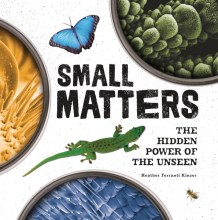

Me: What is it that draws you to picture books?
Heather: Thanks for asking, Jena. I think about this a lot, but no one ever asks. As a writer, I love the brevity and lyricism of picture books. I enjoy creating lovely little things with words—chipping away at a piece of writing, like a sculpture. Back in college, as an English major, the “short-short story” was a form I studied and loved. I liked trying my hand at those, and I also wrote lots of poems—both of which feed nicely into my current interest in picture books.
Additionally, I love the theatrical aspect of picture books. There’s nothing more fun than dramatizing a story for kids. What a gift to parents! As a parent and a person who cares about children, I’m pretty sure picture books are the secret ingredient for raising empathetic, deeply thoughtful human beings with strong vocabularies and broad frames of reference. Finally, I’m drawn to picture books because they are treasure troves of wonder and hope. Now that’s a world I want to live and work in!
Me: What gave you the idea to look at the world of small things under a microscope?


An image of her, with the microscope, popped into my mind one day during Tara Lazar’s StoryStorm challenge, and I wrote down “Magnify Me!” as my story idea for that day. The following month, that idea expanded into a 50-word mini-story for Vivian Kirkfield’s “#50 Precious Words” contest. Another month or so later, I saw an open call for photo-illustratable nonfiction picture books posted on the Lerner Publications blog (Millbrook Press is an imprint of Lerner). I wanted to expand my “Magnify Me!” story again, so I began to research.
The magnified images I found were more than I’d bargained for—crisp, detailed, high-resolution scans of things we could never see clearly before the invention of this rather new-fangled tool, the scanning electron microscope. Right away, I knew kids deserved to know more about this beautiful and mysterious nano-scale world.
Me: Kids know exactly what it is like to be small. Was it important to you to show them how small things can matter? Did you think about kids feeling small when you worked on this topic?
Heather: The short answer is, “Yes!” The long answer is that it took me quite a while to come around to this concept. This book went through three fully developed iterations. The first was Magnify Me!—a 400-word rhyming manuscript. The second was Zoom In!—a 1300-word expository manuscript. The third is the book that will enter the world on April 7—Small Matters. I submitted the Magnify Me! in response to Millbrook’s open call and was invited to revise (aka, drop the rhyme) and resubmit.


I decided to pursue an idea that had sprung to mind when I was first brainstorming my revision—Small Matters. It was just a title, nothing more. But I loved the thematic implications of that title. It seemed to point to an attentive way of looking at the world, and to imply that small features matter, small creatures matter, small people (kids) matter, and even small actions—kindness, inclusion, gratitude—or recycling a plastic straw!
I wrote the first draft of that new manuscript in a single two-hour sitting, while waiting for my daughter at choir practice. Like the voices of the girls’ choir in the background, it spoke to my heart. I ended up sending both of my revised manuscripts to the executive editor at Millbrook, Carol Hinz, and I suspect Small Matters captured her interest because it had a stronger and broader theme—which isn’t exactly an easy thing to achieve in nonfiction, and which only came to me at the last minute through a kind of serendipity.
Me: Did you have to do a lot of research? Can you tell us a bit about that process for this story?


Luckily, my husband is an aerospace engineer with an undergrad degree in physics. I had lots of questions for him. Lots. One of the most challenging questions related to how light interacts with thin-film reflectors to produce iridescent color (all this taking place inside a scale on a butterfly’s wing).


Me: The photographs for this book are stunning. I noticed that no one person was credited for them. Can you talk about that? How were the photographs chosen for the book?
Heather: Millbrook seems to have a team of magical fairy godmother photo editors on their staff. I don’t know any of their names, but I owe my book’s existence to them, because it would be nothing without the photos. They were able to dig around and find incredible stock photos for the book, and I’m pretty sure they had to contact scientific researchers for some, if not most, of the scanning electron microscope (SEM) images.
Early in the process, when the book was on its way to the acquisitions meeting, I was asked to provide samples of the types of photos the book might include. At that point I created a table, using photos from my Internet research. Millbrook took it from there. At one point, I was told I couldn’t have an octopus in the book because a good SEM image of octopus skin in the process of changing its texture could not be found. (Go figure! I’m pretty sure I should have known that from the outset.) So I dove furiously back into researching to find a replacement creature—and came up with a snake. I’m very glad that snake slithered in late to the party.
Me: Any advice for other picture book writers?
Heather: Don’t be surprised if your work goes through several expansion and contraction cycles, as you endeavor to fill it with meaning and then also distill it down to its essence. Oh, and find good critique partners! Mine worked double-time to help me revise and refine this story. They know how much I admire and appreciate them. And just in case they weren’t sure, I made sure to thank them all in my acknowledgments.


Heather: I love the gecko toes—each little seta and spatula! (Those are the names of the hairs and the hairs-on-the-hairs of a gecko’s toes.) It’s crazy to think that none of us is ever really connecting with the things we touch—that is, on a molecular level. And it’s fascinating to know that a gecko gets closer than any other creature to actually touching a surface.
I also love knowing that an octopus can alter its skin in three ways: color, shape, and texture. I was sorry that the octopus had to jet out of my book. The story of its versatile, camouflage skin is pretty cool. Here’s a link to an incredible YouTube video, taken by a researcher from the Marine Biological Laboratory at Woods Hole: octopus skin texture. Watch it, and expect to be blown away.
I LOVE the gecko toes (that was one of my favorite parts in the book too!) and I LOVE that video! It’s one of my favorites and I’ve shown it to students before. I don’t think I knew before seeing this video that an octopus could change the TEXTURE of their skin! You don’t see the octopus until it reveals itself. I was shocked.
Dear readers, if you want to be just as agog as I was at some of the tiny things to be found in the world around us AND discover a great new read, you must check out this book. It’s beautiful in the delivery of its simple yet complex subject matter.